
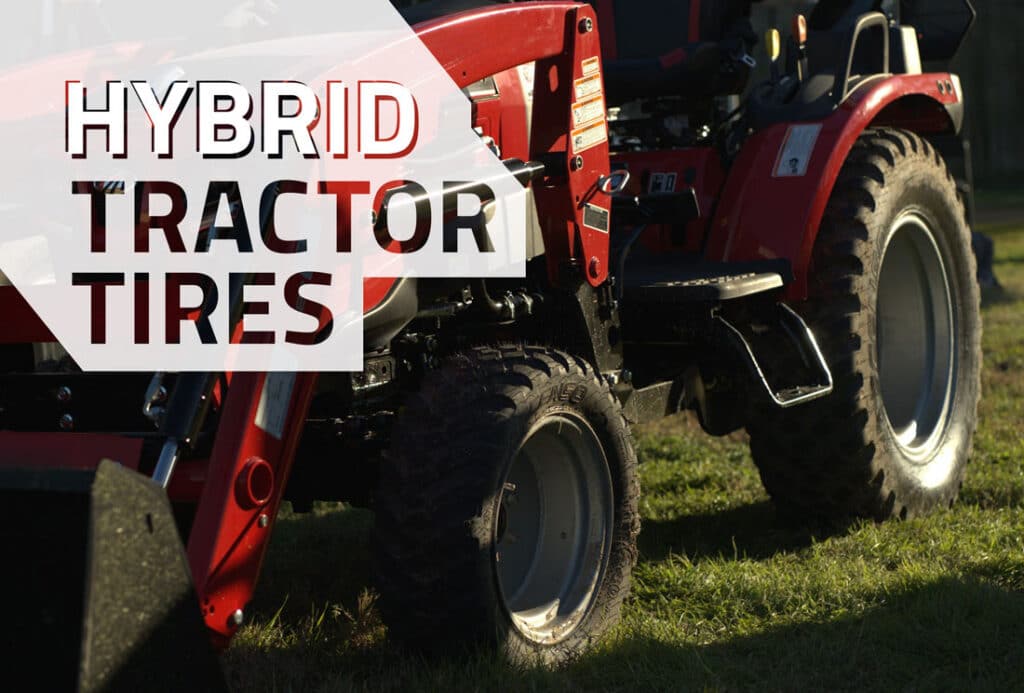
Hybrid Tractor Tires: Versatile Performance for Mixed-Use Equipment
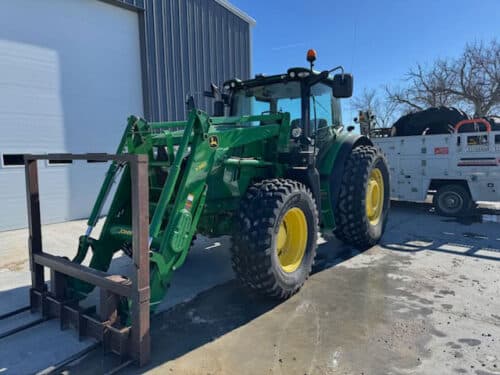 Today’s tractors are expected to handle more than one type of job. A tractor might perform fieldwork, move materials, mow, maintain property, and travel on paved roads, sometimes all in the same day. Those changing conditions can make choosing the right tractor tires more complicated.
Traditional agricultural tires are often designed with a particular application or surface in mind. Hybrid tire technology offers an alternative for tractors that need to perform across a wider range of conditions. By combining characteristics of different tractor tire types, hybrid designs can balance traction, durability, ride quality, and ground protection.
What Are Hybrid Tractor Tires?
Conventional agricultural tractor tires use tread patterns developed for specific operating conditions. R-1 tires feature aggressive lugs for field traction, while R-3 and R-4 designs are better suited to applications where minimizing ground disturbance or improving performance on harder surfaces is important.
Hybrid tractor tires bring characteristics of these tread styles together. Rather than optimizing performance for a single surface, hybrid tires are designed for equipment that regularly moves between soil, grass, gravel, pavement, and other conditions.
This versatility can make hybrid tires a practical choice for utility tractors, hay and livestock operations, loader work, property maintenance, municipalities, orchards, vineyards, and mixed farming operations.
How Hybrid Tractor Tires Deliver Traction
Traction is often one of the biggest considerations when selecting farm tractor tires. Because hybrid treads may look less aggressive than a traditional R-1 pattern, operators may assume they cannot provide the same level of grip.
However, lug depth is only one part of tire traction. Tread geometry, biting edges, contact area, and pressure distribution also affect how effectively a tire engages the ground.
The Ascenso UTR 240 uses a directional block tread with deeper lugs than those typically found on an R-3 tire. The design combines strong pulling performance with reduced ground disturbance, creating a hybrid classification Ascenso calls R-3+. Multiple tread edges help the tire maintain traction across changing surfaces while also providing lateral grip when operating on hillsides and slopes.
Agricultural vs. Industrial Tractor Tires for Mixed-Use Equipment
When comparing agricultural vs industrial tractor tires, the best choice depends heavily on how a tractor is used.
Traditional agricultural tires prioritize characteristics such as traction in soil, while industrial-style tires are commonly selected for equipment spending more time on hard surfaces or performing loader and utility work. For tractors that regularly encounter both environments, choosing between agricultural and industrial tractor tires can mean compromising performance in one part of the operation.
Hybrid tires help bridge that gap. Their tread designs provide the grip required for off-road work while offering greater stability and smoother performance on hard surfaces. This makes them particularly useful when operators want one tire that can accommodate changing jobs without regularly switching between tire types.
The Role of Radial Tire Construction
Tread pattern is important, but tire construction can have an equally significant impact on performance. Radial tractor tires can create a wider, more consistent footprint that distributes equipment weight more evenly across the ground.
Steel-belted radial construction can further stabilize that footprint. By reducing tread element movement, steel belts can help promote even wear on both field and hard surfaces. They also help dissipate heat, which can contribute to longer tire life during demanding applications.
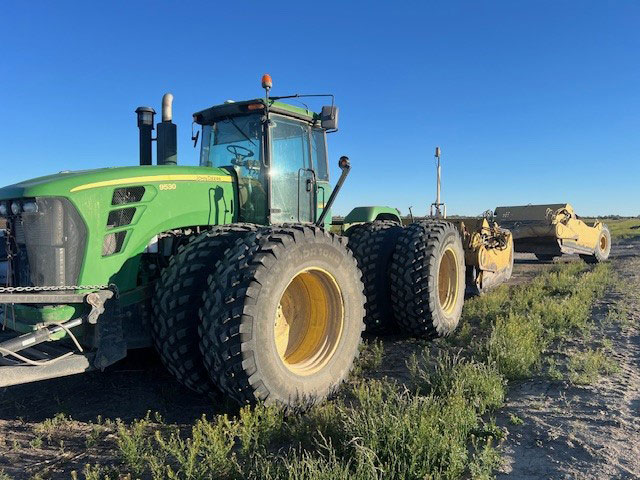
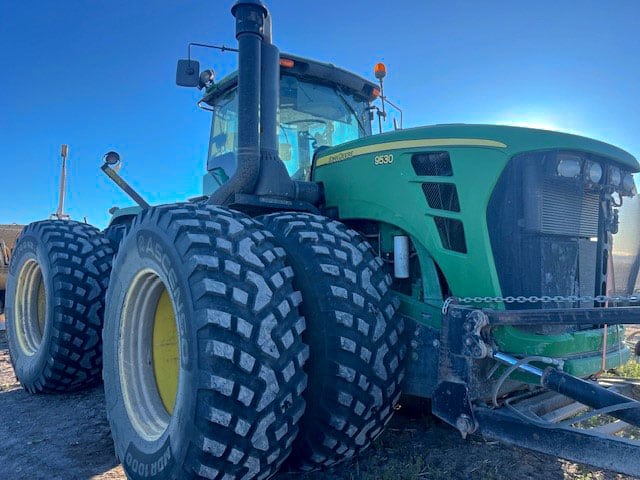
The Ascenso MDR 1000 demonstrates these characteristics in heavy agricultural use. During field testing on a John Deere 9530 in Idaho, 710/70R42 MDR 1000 tires showed approximately 14% wear after more than 600 hours and seven months of heavy-pull operation with double pan scrapers and a deep-till subsoiler. At approximately 3,200 hours and two years in service, the same tires were close to 50% worn while continuing to perform effectively.
The full radial construction of the Ascenso UTR 240 provides similar benefits for mixed-use utility tractors. Its larger footprint and increased tread void support traction and lower rolling resistance, while rounded shoulders help protect turf and encourage self-cleaning.
Benefits of Hybrid Tires for Tractors
For equipment that regularly transitions between applications, hybrid tires for tractors can provide several advantages.
- Versatile traction: Multiple biting edges and an optimized contact patch help maintain grip across varying surface and soil conditions.
- Improved road performance: A higher block count and optimized rubber-to-void ratio can help reduce vibration and tire noise at higher speeds.
- Reduced ground disturbance: A more evenly distributed footprint helps minimize soil compaction and protect turf and crop emergence.
- Consistent tire wear: Reduced tread movement can promote more even wear when equipment regularly travels between fields and hard surfaces.
- Lower rolling resistance: Optimized tread geometry and radial construction can help reduce rolling resistance and support efficient operation.
- Greater application flexibility: One tire design can accommodate multiple jobs, making hybrid tires particularly useful for tractors that rarely stay on one type of terrain.
Choosing the Right Tires for Your Tractor
There is no single tread pattern that is best for every tractor or application. When evaluating tires for tractors, operators should consider how much time the equipment spends in the field, on turf, on hard surfaces, and traveling between job sites.
Equipment dedicated primarily to heavy fieldwork may still benefit from traditional farm tractor tires designed specifically for those conditions. For machines that frequently transition between field and road applications, hybrid tractor tires can provide a more balanced combination of traction, durability, ride quality, and surface protection.
Ascenso offers tire options developed for a wide range of agricultural applications. The MDR 1000 combines steel-belted radial construction with durability and traction for demanding fieldwork, while the UTR 240 provides a full radial hybrid option for utility tractors working across fields, turf, and hard surfaces.
Ready to find the right tractor tires for your equipment? Explore Ascenso’s selection of agricultural tires to compare tread patterns, sizes, and specifications, or contact your local Ascenso dealer to find a tire that fits your equipment and application.